
VIP member
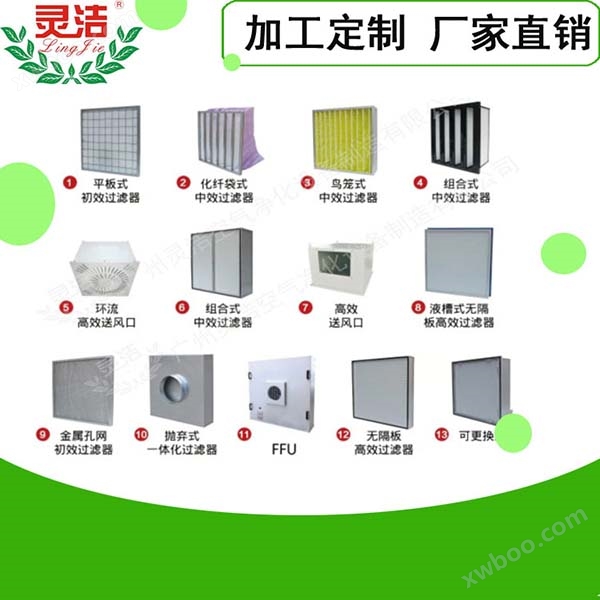
Hospital ICU high-efficiency filter | Hospital air conditioning filter
When replacing high-efficiency filters/air conditioning filters in hospital clean operating rooms, it is forbidden for the dust and glue from the air
Product details
When replacing high-efficiency filters/air conditioning filters in hospital clean operating rooms, it is forbidden to contaminate the operating room with dust and glue from the air conditioning filters (high-efficiency filters). When sealing, it is recommended to clean the inside of the filter box when replacing; If you don't know how to replace it yourself, you can contact the manufacturer to clean and replace it.
After replacing the high-efficiency filter, it is recommended to test whether it meets the initial cleanliness level. If it does not meet the cleanliness level, a dust particle counter can be used to measure it. There are generally three reasons why the cleanliness level cannot be reached:

Hospital ICU high-efficiency filter | Hospital air conditioning filter itself issues
Hospital ICU high-efficiency filter | Hospital air conditioning filter and installation box are not sealed properly
If you are unsure about the internal issues of the operating room, you can contact the manufacturer for a cleaning solution!
Before installing the high-efficiency air conditioning filter in the operating room, the following conditions should be met:
The decoration and piping route of the clean room (area) building have been completed and accepted as qualified
The clean room (area) has been thoroughly cleaned and wiped clean, and the purification air conditioning system has been wiped clean and continuously tested for more than 12 hours;
The installation site and related parts of the high-efficiency filter have been cleaned and wiped clean;
High efficiency filters should undergo a visual inspection of the frame, filter paper, sealant, etc., and there should be no deformation, breakage, detachment, or other damage;
High efficiency filters belong to hospital purification consumables. In order to ensure cleanliness, they generally need to be replaced every once in a while. Nowadays, most purification areas install high-efficiency filters at the ceiling air supply outlet. The installation method and confirmation before installation completely determine whether there are any leakage points in the high-efficiency filters.
When installing hospital ICU high-efficiency filters | hospital air conditioning filters, the following issues must be noted
When transporting and storing high-efficiency filters, they should be placed in the direction indicated by the manufacturer's logo. During transportation, handle with care to prevent severe vibration and collision, in order to avoid human damage.
Before installing the high-efficiency filter, the clean room must be cleaned, wiped, and purified. If there is dust accumulation inside the air conditioning system, it should be cleaned and wiped again to meet the cleaning requirements. If high-efficiency filters are installed in the technical interlayer or ceiling, the technical interlayer or ceiling should also be thoroughly cleaned and wiped.
After the cleanroom and purification air conditioning system meet the cleanliness requirements, the purification air conditioning system must be put into trial operation. Operate continuously for more than 12 hours, clean and wipe the clean room again, and immediately install a high-efficiency filter.
Before installing the high-efficiency filter, it is necessary to unpack the packaging at the installation site for visual inspection, including whether there are burrs and rust spots on the filter paper, sealant, and frame (metal frame), whether there is a product qualification certificate, and whether the technical performance meets the design requirements. Then carry out leak detection. (See Appendix VI, 1) Those that have passed inspection and leak detection should be installed immediately. During installation, reasonable adjustments should be made based on the resistance of each filter. For one-way flow, the difference between the rated resistance and average resistance of each filter on the same air outlet or supply surface should be less than 5%.
The frame for installing high-efficiency filters should be flat. The allowable deviation for the flatness of the installation frame of each high-efficiency filter is not more than 1mm. In addition, the arrow on the outer frame of the filter should be kept consistent with the direction of the airflow. When installed vertically, the folds of the filter paper should be perpendicular to the ground.
When sealing between high-efficiency filters and frames using methods such as gaskets, stickers, negative pressure seals, liquid tank seals, and double ring seals, the surface of the packing, filter frame surface, frame surface, and liquid tank must be wiped clean. The thickness of the sealing gasket should not exceed 8mm, and the compression rate should be 25%~30%. The joint form and material should meet the design requirements, and there should be no leakage at the joints of the frame. When using double ring sealing strips, do not block the holes on the ring cavity when pasting the seal; Both double ring sealing and negative pressure sealing must keep the negative pressure pipeline unobstructed.
At present, most filters in China are installed using the sealing gasket method because the sponge rubber plate is a closed cell type with good air tightness, so it is generally used as a sealing material. If necessary, it is best to evenly apply some glass glue on the sealing strip. When connecting the filter to the static pressure box, the surrounding forces should be evenly distributed. Wait for 24 hours until the glass glue dries before running the purification system.
Hospital ICU high-efficiency filter | Hospital air conditioning filter replacement cycle reference
The high-efficiency filter of the operating room purification system is an important guarantee for the sterile environment of surgery. According to relevant national regulations, the high-efficiency filter of the operating room needs to be replaced every 2-3 years to ensure the purification effect.
Preparation work for replacing the high-efficiency filter in the operating room:
Manage the entry and exit of personnel and various items in the operating room.
Powder gloves are not allowed in laminar flow operating rooms.
It is strictly prohibited to fold various cloth dressings or bring personal items such as books and newspapers into the operating room.
Emergency surgery should be performed in the outermost operating room of the operating department, while infection surgery should be performed in the operating room near the sewage channel.
The surgical equipment should operate continuously, with sufficient self purification time between intervals.
All cleaning work must be wiped with a damp cloth during the operation of the purification system.
All instruments and equipment entering the operating room should be installed and wiped clean before entering.
After the surgery, the area should be immediately cleaned, wiped, and various items should be organized.
After the surgery, all kinds of dirt should be removed, and the bags should be classified and sealed before being transported out through the dirt channel.
Before and after surgery, wipe the surfaces and floors of various equipment such as shadowless lamps, instrument carts, anesthesia tables, operating beds, and cabinets with disinfectant once a day.
Clean and disinfect the isolation shoes worn by the staff after use.
Thoroughly wipe, disinfect, clean, and maintain all equipment and floors once a week.
Clean the coarse filter, medium efficiency filter, and return air outlet device once a week.
Disinfect the coarse filter, medium efficiency filter, and return air network with a 500 mg/L chlorine containing disinfectant wet wipe every two weeks.
Sample the air and equipment surfaces of the clean operating room for bacterial culture every month, and test the temperature and humidity once. And register the results for record keeping.
Replace the initial and intermediate filters every 6 months. Replace the high-efficiency air conditioning filter annually.
The infection control team in the operating room conducts monthly monitoring and sampling of air, hands, surfaces, disinfectants, etc., and summarizes the rectification of monitoring work.
The air cleanliness monitoring adopts the "multi-point control sampling" detection method. Static method is the main approach, with dynamic method as a supplement.
Install high-efficiency filters in the operating room to avoid dusty operations
The installation of high-efficiency air filters in operating rooms should comply with the following regulations:
After the appearance inspection of the high-efficiency air filter in the operating room is qualified, it should be installed immediately;
The frame for installing high-efficiency filters should be flat and clean, and the flatness deviation of the installation frame for each filter should not exceed 1-2mm;
The installation direction of the filter must be correct, and after installation, the surroundings and interfaces of the filter should be tight and leak free;
When using mechanical seals for high-efficiency filters, airtight gaskets with a thickness of 6-8 mm should be used for sealing, and they should be tightly attached to the filter frame; The compression of the cushion material after installation should be uniform, with a compression rate of 25-50%; Scanning and leak detection should be carried out after installation;
When the high-efficiency filter adopts hydraulic sealing, the groove frame should be installed horizontally and there should be no leakage; There is no dirt or moisture in the tank. The height of the sealing liquid in the groove should be 2/3 of the groove depth, and the melting point of the sealing liquid should be higher than 50 ℃.
Hospital ICU high-efficiency filter | The layout of hospital air conditioning filters should meet the following requirements
When arranged parallel to the decorative layer or the uniform flow layer on the lower air supply surface of the static pressure box, the full coverage ratio of the filter should not be less than 0 75.
When arranged on the side of the static pressure box, it can be arranged on one side or the opposite side, and the full coverage ratio of the side filter should not be less than 0 75. Adequate mixing measures should be taken for the airflow inside the static pressure box.
When restricted by the height of the floor and the prohibition of indoor maintenance, a leak proof air supply surface can be used to arrange the filter outside the static pressure box, but it should be placed as close as possible to the static pressure box, and sufficient mixing measures should be taken for the airflow inside the static pressure box; The full coverage ratio of clean airflow should be less than 0.85.
For clean areas below level 100, when the air supply outlets are centrally arranged, the final high-efficiency filters inside the air supply outlets can be arranged centrally or dispersedly, but a uniform flow layer must be installed on the air supply surface.
All clean rooms in Class 100 laminar flow operating rooms should use double-sided lower return air; When the distance between both sides does not exceed 3m, air can be returned to the lower part of one side, but four corner or four side air return should not be used. Clean corridors can use up return air.
Class 100 laminar flow operating rooms should use indoor return air and not have residual pressure valves to return air to the corridor.
A hundred level laminar flow operating room must be equipped with an upper exhaust outlet, which should be located at the top of the patient's head. The blowing speed of the exhaust outlet should not exceed 2m/s.
Attention should be paid when replacing the high-efficiency air filter equipment in the operating room
Manage the entry and exit of personnel and various items in the operating room.
Powder gloves are not allowed to be used in Class 100 laminar flow operating rooms.
It is strictly prohibited to fold various cloth dressings or bring personal items such as books and newspapers into the operating room.
Emergency surgery should be performed in the outermost operating room of the operating department, while infection surgery should be performed in the operating room near the sewage channel.
The surgical equipment should operate continuously, with sufficient self purification time between intervals.
All cleaning work must be wiped with a damp cloth during the operation of the purification system.
All instruments and equipment entering the operating room should be installed and wiped clean before entering.
After the surgery, the area should be immediately cleaned, wiped, and various items should be organized.
After the surgery is completed, all kinds of dirt are removed, and the bags are classified and sealed before being transported out through the dirt channel.
Online inquiry
-
Contacts
-
Company
-
Telephone
-
Email
-
WeChat
-
Verification Code
-
Message Content
-